

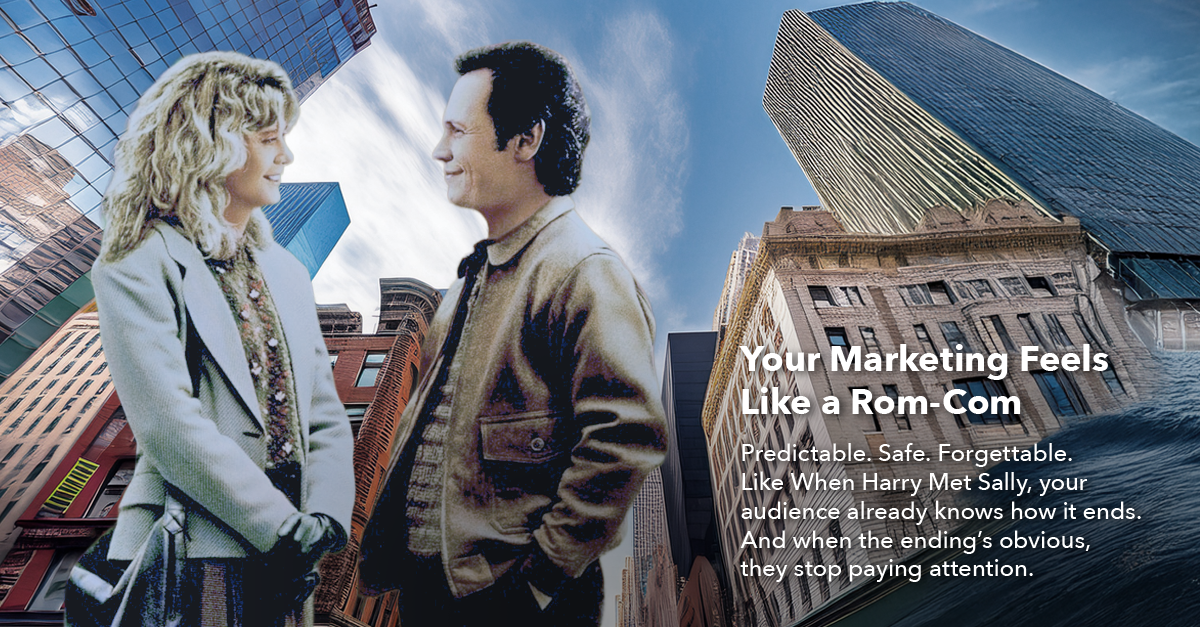
Marketing too often feels like a rom-com. The script is familiar: the When Harry Met Sally meet cute, the corny one-liner, the inevitable happy ending. Safe. Predictable. Forgettable. But your audience isn’t looking for a love story—they’re bracing for survival. Their attention is under attack. Their choices are overwhelming. And the brands that bore them? They don’t get a second chance.
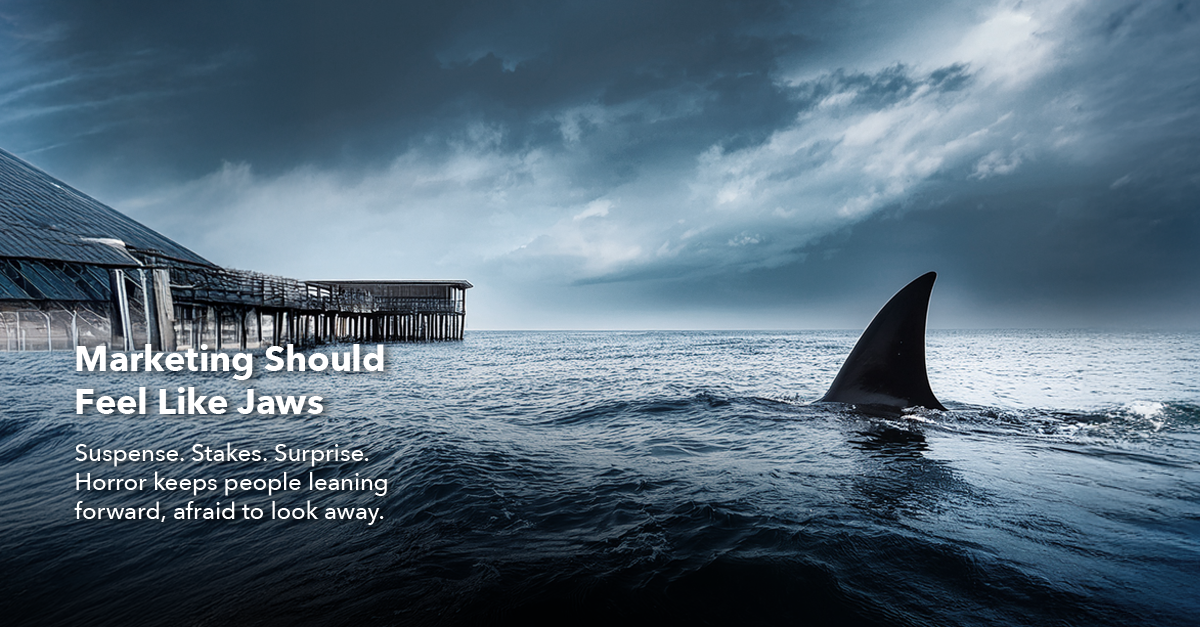
Horror gets this. Just look at Jaws—a story that makes you lean forward, heart racing, knowing danger is out there even when you can’t see it. That’s the power marketers need to steal: not comfort, but suspense. Not clichés, but the thrill of the unexpected.
The Rom-Com Problem
Rom-coms are built on formula. In When Harry Met Sally, you know exactly where it’s heading. They meet, they clash, they circle each other for two hours, and of course—they end up together. It’s sweet. It’s safe. It’s inevitable.
Too many marketing campaigns play the same way. Predictable taglines, stock images, and happy-ever-after promises. It’s the marketing equivalent of boy-meets-girl.
But the problem is clear: when your audience knows the ending, they tune out. Predictability kills curiosity. Comfort doesn’t create urgency. Rom-com marketing fades into background noise—the kind people scroll past without a second thought..
What Horror Gets Right
Now contrast that with Jaws. From the first ominous notes, you’re hooked. You don’t even see the shark for half the movie, but the suspense is unbearable. Every ripple in the water makes you lean in closer.
That’s what horror understands: it builds tension, delivers the unexpected, and raises the stakes. You never feel safe, and that’s what keeps you watching.
In marketing, that translates into campaigns that tease before they reveal, that twist expectations, that play on urgency and risk. Like Jaws, you don’t have to show everything at once—sometimes the unseen is more powerful than the obvious.ing.
Practical Ways to Apply Horror to Marketing
Marketers don’t need to drop a shark into their ad campaign—but they can steal Jaws’ mechanics.

The Survivor: At the end of the movie, it’s about who makes it out alive. That’s your customer—the one who beats the odds with your solution in hand.

The Jump Scare: Just like that sudden attack from beneath the water, grab attention instantly with a bold stat, an unexpected visual, or a disruptive opening line.

The Slow Burn: Spielberg made us wait—building suspense scene by scene. Do the same with a campaign rollout, revealing content in layers instead of dumping everything at once.

The Monster Reveal: In Jaws, the shark is the villain. In marketing, it’s the lurking problem you solve—cost, inefficiency, risk. Hold it back just long enough, then reveal it so the stakes feel real.
Why This Works in Today’s Market
Safe doesn’t sell anymore. The When Harry Met Sally formula of “meet, flirt, happy ending” might charm in theaters, but in marketing it gets lost in the noise. Audiences today are living in uncertainty. Their world feels less like a rom-com and more like a shark-infested ocean. Every choice carries weight. Every delay feels dangerous.
That’s why the Jaws approach works. Suspense keeps people engaged. Stakes drive urgency. And surprise ensures they can’t look away. Comfort is forgettable. Suspense is magnetic. The brands that win today aren’t telling love stories—they’re telling survival stories.
Conclusion
Rom-com marketing gives your audience comfort—and comfort makes them forget you. Horror gives them suspense, surprise, and stakes they can feel. That’s what keeps people leaning forward. So stop pitching like you’re writing When Harry Met Sally. Start marketing like you’re directing Jaws—because attention is always the shark circling just beneath the surface.
 fraction.ly