

We were halfway through filming when I realized something had shifted. Trey wasn’t just helping out, he was shaping the project. Offering notes. Reworking shots. Challenging choices I normally make on instinct. And for the first time in years of making short films together, we weren’t just father and son on set. We were creative partners.
For nearly every film I’ve made, Eric—my longtime collaborator and creative counterpart—has been by my side. But this time, he was unavailable for the weekend. And while that initially felt like a loss, it created space for something new: a chance for Trey to step fully into the process.
Trey’s been part of these films since he was a kid. He’s held boom mics, helped strike sets at midnight and taken smaller acting roles. But this was different. This was the first time we built something together from the ground up.
Over the course of a few very long days, I found myself moving between three roles: parent, director, and collaborator. Each one stretched me in unexpected ways. And by the end of the shoot, the film we made wasn’t the only thing I was proud of.
The Parent: The Familiar Role, in a New Context
Trey grew up around these films. He’s been part of the process for most of his life—sometimes by choice, sometimes because he was in the room and I needed an extra pair of hands. He’s seen the frantic writing sessions, the gear piles in the living room, the 2 a.m. editing marathons. He knows the rhythm. But until now, he hadn’t really been inside it. This time, that changed.
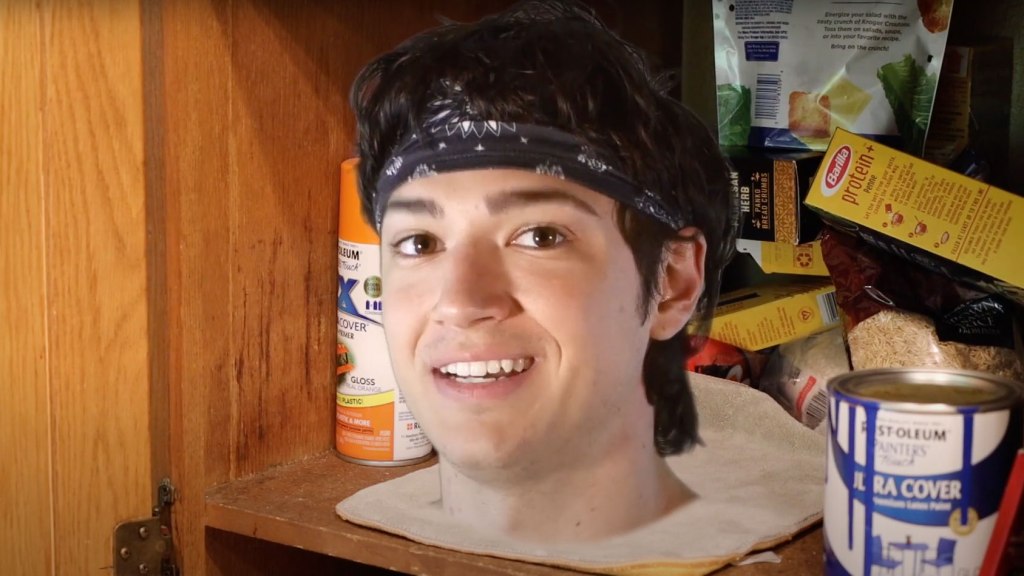
As a parent, you get used to being the guide—offering support, giving direction, stepping in when needed. But on set, I found myself watching Trey step into his own voice. He wasn’t just taking cues—he was giving them. He had a point of view, and more importantly, he had the confidence to share it.
And I’ll be honest: that shift wasn’t seamless.
There were moments I defaulted to the dad role—jumping in too quickly, assuming I knew better. But when I paused long enough to listen, I realized he was seeing things I wasn’t. Sometimes with fresh eyes. Sometimes with sharper instincts. It’s a strange thing to experience as a parent: to realize your kid isn’t just learning from you anymore—they’re teaching you, too.
This project reminded me that parenting, especially as your kids become adults, is less about instruction and more about recognition. Seeing who they’re becoming. Trusting their instincts. And giving them the space to grow—even when that means giving up some of your own.
The Director: Vision, Structure, and the Pressure to Deliver
I’ve directed over 30 short films, most of them under ridiculous time constraints. I know how to run a tight set, make decisions quickly, and keep things moving. Directing is where I’m comfortable. It’s where I know how to lead. But this time, stepping into that role came with a twist.
Because directing your own kid—especially when they’re no longer a kid—isn’t the same as directing a crew. It’s a balancing act between structure and flexibility, between holding the vision and making space for someone else’s. And when that “someone else” is your son? The stakes feel different.
At times, I was torn between two instincts. First: stick to the plan, make the day, trust the process. The second: pause, listen, see where he wants to take it.
It wasn’t always easy. There were shots I thought we should move on from that Trey wanted to try again. There were lines he pushed to rework, beats he wanted to slow down, moments he felt needed more space. And more often than not… he was right.
What I learned (again) is that good direction isn’t about rigid control. It’s about creating the conditions for something better to emerge. Even if that means letting go of what you thought it should be. As a director, my job has always been to guide the story. But this time, it meant making sure both of our voices were in it.
The Collaborator: Trust, Surprise, and Shared Ownership
Collaboration, when it works, feels a little like jazz. You riff. You respond. You build on each other’s energy until something clicks, and it’s not yours or theirs anymore. It belongs to both of you.
That’s what happened on this film.
When you’re used to running things, true collaboration can feel like surrender. Like giving up control. But what I realized working with Trey is that it’s not surrender—it’s expansion. It’s widening the creative circle to include another mind, another voice, another perspective that sees something you don’t.
There were times on set when we hit a wall—too many options, not enough time—and I’d ask, “What do you think?” And his answer helped move us forward. Not just because it was a good answer, but because I trusted it.
That trust is what made this collaboration work. Not just between two filmmakers, but between two people who know each other in a thousand ways—and were now getting to know each other in one more.
We didn’t just make a film. We made it together. Fully. Equally. And I wouldn’t change a frame of that.
 fraction.ly